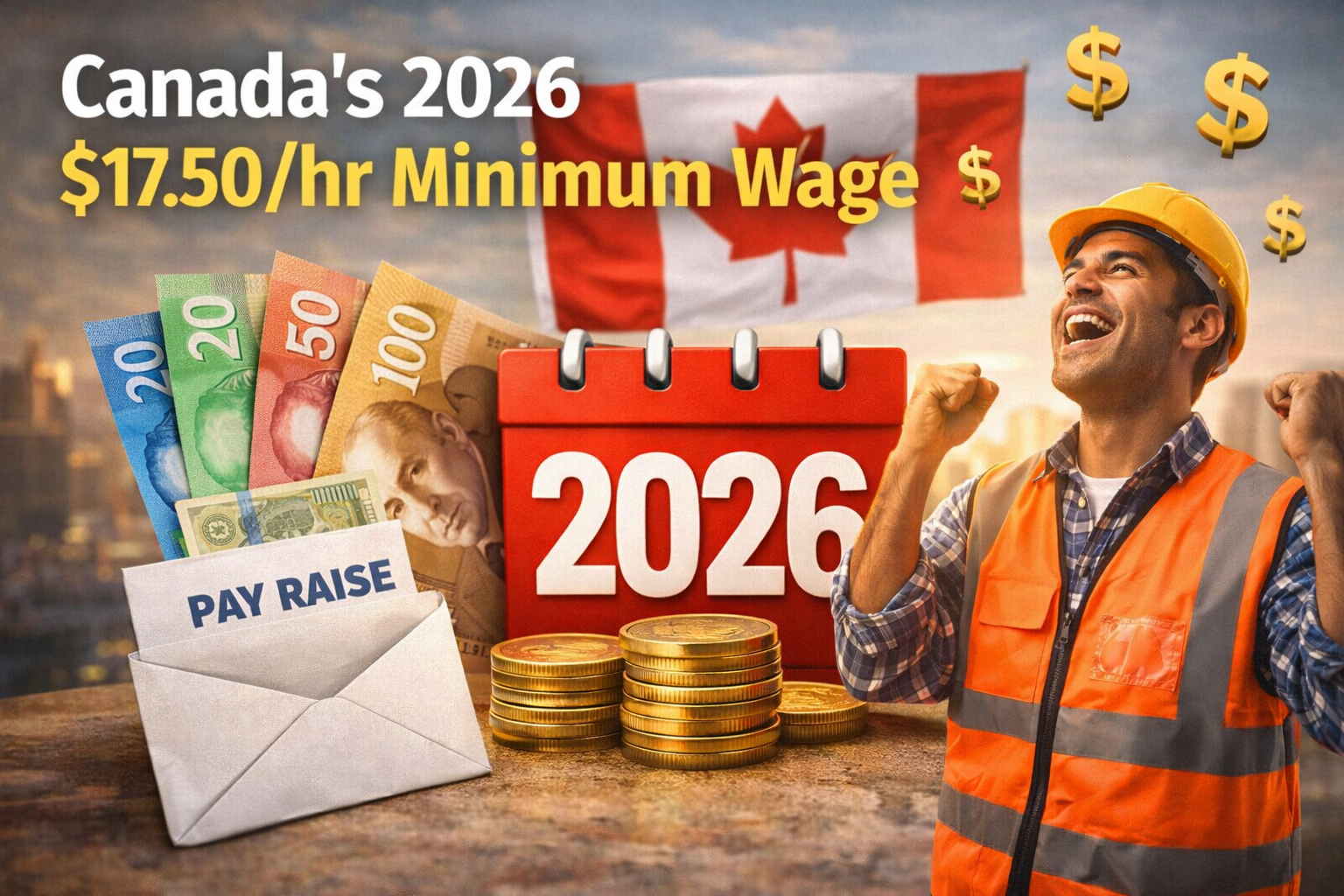
Canada Minimum Wage : In 2026, Canada and five provinces are gearing up for a significant boost in minimum wage rates, with hourly pay expected to reach as high as $17.50 per hour. This change is part of the country’s broader strategy to help low-income earners cope with rising inflation and the ever-increasing cost of living.
Why Are Minimum Wages Increasing in 2026?
Responding to Inflation and Affordability Pressures
Over recent years, the cost of essentials like food, rent, fuel, and healthcare has surged, making life more expensive—especially for those earning minimum wage. The 2026 increases are designed to help restore purchasing power and ensure workers can better meet their day-to-day expenses.
Indexing Wages to Inflation and Growth
Many provinces now tie their minimum wage increases to inflation or average wage growth, meaning adjustments happen automatically rather than through sporadic legislation. This system ensures wage increases keep up with economic realities, without political delay.

Which Provinces Are Raising Their Minimum Wages?
In Canada, each province sets its own minimum wage, resulting in some regional variation. In 2026, five provinces are expected to raise wages closer to or reaching $17.50 per hour.
While not all provinces are adopting the same amount, the overall trend is upward, with higher living-cost provinces pushing for more aggressive wage increases.
Regional Wage Differences Still Matter
Despite the hikes, not all provinces will have the same wage rate. Urban centers with higher costs—like British Columbia or Ontario—are more likely to reach the top end of the scale. Meanwhile, less expensive provinces may lag slightly behind due to different economic conditions.

What Does a $17.50 Minimum Wage Mean for Workers?
For full-time workers, $17.50/hour means thousands more in annual income. This boost can help with housing, food, transportation, and savings. Even part-time workers will benefit by earning more per hour, which improves overall income stability.
Improved Financial Security
Higher wages reduce reliance on credit cards, payday loans, or government assistance, especially for single-income households. With better earnings, workers are better equipped to handle emergencies, bills, and long-term financial planning.
How Will Employers and Small Businesses Be Affected?
For employers—especially small businesses—higher wages mean increased payroll expenses. To manage this, businesses may adjust staffing, raise prices, or alter operations.

That said, gradual wage increases give businesses time to plan, helping them adapt without major disruptions.
Potential Upsides for Employers
Many employers could also see positive effects like:
- Reduced employee turnover
- Higher morale and productivity
- Increased consumer spending—since workers with more disposable income are likely to spend locally
These benefits can offset some of the cost pressures associated with rising wages

Broader Economic Impacts of the Wage Increases
When minimum wage workers earn more, they tend to spend that money in their communities. This fuels demand for local services and goods, especially in retail, hospitality, and transportation.
Addressing Inflation Concerns
While some critics fear wage hikes might worsen inflation, most 2026 increases are aligned with current inflation levels, not above them. Policymakers aim to strike a balance between fairness and economic stability
The Difference Between Minimum Wage and Living Wage
While $17.50/hour is a big step up, it still may fall short of a true “living wage”, especially in expensive cities like Vancouver or Toronto. A living wage represents the amount needed to live without financial stress, and in some places, that may be $20 or more.

Momentum for Future Wage Reforms
Labour groups continue to push for wages that reflect regional realities. The 2026 increases are seen as progress but also a stepping stone toward more inclusive wage policies in the future.
What Should Workers Expect?
Employees should:
- Stay updated on their province’s minimum wage announcements
- Check their pay stubs after new rates take effect
- Ask HR for clarification if pay does not reflect new standards
Being proactive can help ensure workers get what they’re owed.
What Should Employers Do?
Employers should:
- Update payroll systems in advance
- Communicate changes clearly with staff
- Adjust budgets to reflect higher labor costs
Preparation and transparency will be essential to managing these changes effectively.
Canada’s Long-Term Outlook on Minimum Wage
Canada is moving toward a future where minimum wage better reflects real-life costs. With indexing and regular reviews, wage adjustments are likely to continue as a standard economic tool, rather than a political debate.
Monitoring the Impact
Governments and economists will be closely watching:
- Employment trends
- Business sustainability
- Inflation metrics
These factors will determine how minimum wage policies evolve beyond 2026.